


As the intense summer sun relinquishes its grip, the vast, silent landscapes of the American deserts beckon. The oppressive heat gives way to mild, sun-drenched days and crisp, cool nights, creating the perfect conditions for exploration. This seasonal shift transforms these arid regions from challenging territories into accessible wonderlands, revealing a beauty often overlooked during the hotter months. With fewer crowds and a more forgiving climate, autumn is unequivocally the prime season to witness the subtle, profound allure of these unique environments.
Discovering the allure of American deserts
Beyond the stereotypes
When one pictures a desert, the image is often of a desolate, lifeless expanse of sand. The reality of America’s deserts, however, is far more complex and captivating. These are thriving ecosystems, home to resilient flora and fauna that have adapted in remarkable ways. From the sculptural Joshua trees of the Mojave to the towering saguaro cacti of the Sonoran, life persists with tenacity. The geology itself tells a story millions of years in the making, with wind and water carving out breathtaking canyons, mesas, and badlands painted in a palette of ochre, rust, and violet.
The magic of the golden hour
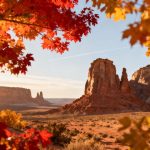
There is a unique quality to the light in the desert, particularly during the autumn months when the sun sits lower in the sky. The hours surrounding sunrise and sunset, often called the golden hour, bathe the landscape in a warm, ethereal glow. Long shadows stretch across the terrain, accentuating every contour and texture of the rock formations and sand dunes. This dramatic interplay of light and shadow is a photographer’s dream and offers a moment of serene, almost spiritual connection with the natural world for any visitor.
A season of transformation
Autumn marks a significant transition in the desert climate, making it the ideal time for travel and outdoor activities. The extreme temperatures of summer recede, creating a comfortable environment for hiking, camping, and sightseeing. The air is often clearer, offering expansive, crystal-clear views of the distant horizons and the star-filled night sky. This seasonal shift is what truly unlocks the potential for deep exploration.
| Location | Average July High (°F) | Average October High (°F) |
|---|---|---|
| Death Valley, CA | 116°F | 93°F |
| Joshua Tree, CA | 99°F | 79°F |
| Sedona, AZ | 95°F | 75°F |
The dramatic drop in temperature, as illustrated above, transforms these destinations. This comfortable climate invites a closer look at specific parks, starting with a California icon where two distinct desert ecosystems converge.
Visiting Joshua Tree National Park in the fall
Navigating the park’s two deserts
Joshua Tree National Park is a place of fascinating contrasts, defined by the meeting of two distinct desert ecosystems. The western half of the park lies within the Mojave Desert, a higher, cooler, and wetter environment that is the exclusive home of the park’s namesake, the Yucca brevifolia or Joshua tree. Its eastern portion transitions into the Colorado Desert, a lower and hotter section of the larger Sonoran Desert, characterized by creosote bushes, ocotillo, and cholla cactus gardens. Exploring the park in the fall allows visitors to comfortably experience the unique characteristics and subtle beauty of both landscapes.
Activities for the autumn adventurer
The mild autumn weather opens up a world of possibilities for outdoor enthusiasts. The park’s extensive network of trails becomes far more accessible than during the scorching summer months. From leisurely nature walks to challenging mountain ascents, there is a hike for every skill level. Beyond hiking, Joshua Tree is a world-renowned destination for rock climbing and bouldering, attracting climbers from across the globe to its unique granite monoliths. As night falls, the adventure continues.
- Hiking: Popular trails include the one-mile loop around Barker Dam, the panoramic views from the summit of Ryan Mountain, and the otherworldly landscape of the Cholla Cactus Garden.
- Rock Climbing: The grippy quartz monzonite rock offers thousands of established climbing routes, with areas like the Hidden Valley Campground serving as a central hub for climbers.
- Stargazing: As an officially designated International Dark Sky Park, Joshua Tree provides breathtaking views of the Milky Way. The cool, clear nights of autumn are perfect for laying out a blanket and gazing at the cosmos.
Planning your visit
To make the most of a trip to Joshua Tree in the fall, some planning is essential. Weekends can still be busy, so arriving early in the day is recommended to secure parking at popular trailheads. While camping within the park is a classic experience, sites are highly sought after and should be booked well in advance. Alternatively, nearby towns like Twentynine Palms, Joshua Tree, and Yucca Valley offer a range of accommodation options. Regardless of your plans, carrying an ample supply of water is non-negotiable, as the desert air remains dry even when temperatures are mild.
From the surreal rock formations of Joshua Tree, our journey takes us to another California desert, one known for its record-breaking extremes and stunning, desolate beauty.
Exploring the wonders of Death Valley National Park
From extreme heat to pleasant warmth
Death Valley is a land of superlatives. It is the hottest, driest, and lowest place in North America. While its name and reputation for extreme summer heat—holding the world record at 134°F—can be intimidating, visiting in the fall reveals a completely different side of the park. The oppressive heat subsides, replaced by pleasantly warm days and comfortable nights, making it not only safe but truly enjoyable to explore its vast and varied terrain. This seasonal change is critical for accessing the park’s most famous sites.
| Month | Average High | Average Low |
|---|---|---|
| July | 116.5°F | 88.2°F |
| August | 114.7°F | 86.1°F |
| October | 92.8°F | 61.5°F |
| November | 77.1°F | 48.1°F |
Iconic viewpoints and landscapes
The park’s immense scale offers a stunning diversity of landscapes, each with its own unique character. The comfortable autumn weather allows for extended exploration of these iconic locations, which are often best experienced during the soft light of early morning or late afternoon.
- Badwater Basin: At 282 feet below sea level, this is the lowest point in North America. Visitors can walk out onto the vast salt flats, a surreal landscape of geometric salt polygons stretching to the horizon.
- Zabriskie Point: This is perhaps the most famous viewpoint in the park, offering a spectacular panorama of golden-colored, eroded badlands. It is an essential stop for sunrise photography.
- Mesquite Flat Sand Dunes: Located near Stovepipe Wells, these classic, rolling sand dunes provide an opportunity to experience a quintessential desert landscape. The morning and evening light creates dramatic shadows on the rippled sand.
- Artist’s Drive and Artist’s Palette: This scenic, one-way road winds through multi-hued volcanic and sedimentary hills. The highlight is the Artist’s Palette, where mineral oxidation has painted the hillsides in shades of green, pink, and purple.
Unique geological phenomena
Beyond the main attractions, Death Valley holds geological wonders that speak to its complex history. One of the most mysterious is the phenomenon of the “sailing stones” at Racetrack Playa. For decades, the movement of these large rocks across the flat, dry lakebed baffled scientists. Recent studies have revealed that a rare combination of conditions—a thin layer of ice forming on the playa, which then breaks up into large sheets moved by light winds—pushes the rocks, leaving long tracks behind them. While reaching the Racetrack requires a high-clearance 4×4 vehicle, its story adds to the park’s mystique.
While Death Valley showcases the stark power of geology, another desert destination offers a landscape where stunning rock formations are intertwined with art, culture, and a unique spiritual energy.
Enjoying the autumn charm of Sedona and its surroundings
The energy of the red rocks
Nestled in the heart of Arizona, Sedona is famous for its magnificent red sandstone formations that jut dramatically from the high desert floor. Landmarks like Cathedral Rock, Bell Rock, and Courthouse Butte glow with an intense, fiery color, especially under the autumn sun. Beyond their visual appeal, these formations have made Sedona a global destination for spiritual seekers. The area is believed to contain several vortexes, or sites of concentrated energy, which are thought to facilitate meditation, healing, and self-exploration. Whether one feels the energy or simply admires the view, the landscape is undeniably powerful.
Outdoor pursuits in perfect weather
Autumn is the premier season for outdoor activities in Sedona. The mild temperatures are ideal for exploring the hundreds of miles of trails that wind through the red rock country. Hiking is the most popular way to experience the landscape up close, with trails ranging from easy, scenic walks to strenuous climbs that reward with breathtaking panoramic views. For a different kind of adventure, rugged jeep tours take visitors deep into the backcountry, navigating rocky terrain to reach remote arches and viewpoints inaccessible by regular vehicles. The scenic drive through Oak Creek Canyon is particularly beautiful in the fall, as the deciduous trees along the creek display vibrant autumn foliage, a striking contrast to the surrounding red rocks.
A hub for art and culture
Sedona’s natural beauty has long inspired a thriving arts community. The city is home to nearly 100 art galleries, showcasing everything from contemporary Southwestern painting and sculpture to traditional Native American crafts. The Tlaquepaque Arts & Shopping Village, designed to resemble a traditional Mexican village, offers a charming setting to browse artisan shops and galleries. This artistic spirit is deeply connected to the region’s rich cultural history, which includes the ancient Sinagua people who once inhabited the area, leaving behind cliff dwellings and rock art that can still be visited today.
The blend of natural beauty and deep cultural roots found in Sedona serves as a gateway to understanding the broader cultural tapestry of the American Southwest, which is nowhere more evident than in the diverse landscapes of New Mexico.
Appreciating New Mexico’s landscapes and cultures
The Land of Enchantment’s diverse deserts
New Mexico truly lives up to its nickname, the “Land of Enchantment,” with landscapes that are as varied as they are stunning. The state encompasses a significant portion of the northern Chihuahuan Desert in the south and the high-altitude desert of the Colorado Plateau in the north. This diversity gives rise to remarkable natural wonders. The most iconic is undoubtedly White Sands National Park, where brilliant white dunes composed of gypsum sand stretch for miles, creating an otherworldly scene. In contrast, the northern part of the state features dramatic mesas, volcanic necks like Shiprock, and the colorful canyons that inspired countless artists.
A convergence of cultures
What makes New Mexico’s deserts truly unique is the deep and continuous history of human habitation. This is a land where Native American, Hispanic, and Anglo cultures have converged for centuries, creating a rich and vibrant cultural mosaic. Visitors can explore ancient sites like Chaco Canyon or visit living communities like Taos Pueblo, a UNESCO World Heritage site continuously inhabited for over 1,000 years. The state’s capital, Santa Fe, is renowned for its distinctive Pueblo-style adobe architecture, a world-class art market, and a culinary scene that reflects its blended heritage.
Fall events and seasonal flavors
Autumn in New Mexico is a particularly special time, marked by signature events and seasonal traditions that draw visitors from around the world. The crisp, clear fall air is perfect for these unique cultural experiences.
- Albuquerque International Balloon Fiesta: Held every October, this nine-day event is the largest hot air balloon festival in the world, where hundreds of balloons create a spectacular mass ascension at dawn.
- Chile Harvest: Fall is green chile season in New Mexico. The unmistakable aroma of roasting chiles fills the air at farmers’ markets and roadside stands across the state, a central part of New Mexico’s culinary identity.
- Studio Tours: Many small towns and art communities, particularly in the north, host annual studio tours in the fall, allowing visitors to meet artists and see their work in the spaces where it is created.
These distinct destinations, from California to New Mexico, highlight the variety available to travelers, but many core experiences and adventures can be found across all of America’s desert regions.
Unique adventures and experiences in American deserts
Stargazing in dark sky parks
The remote locations and dry, clear air of American deserts provide some of the best stargazing opportunities on the planet. Many desert parks are officially recognized by the International Dark-Sky Association for their commitment to preserving the natural darkness of the night sky. Away from the light pollution of major cities, the Milky Way stretches across the heavens in breathtaking detail. Parks such as Big Bend National Park in Texas, Great Basin National Park in Nevada, and the previously mentioned Joshua Tree and Death Valley offer unparalleled views of constellations, planets, and meteor showers, making a night in the desert a truly celestial experience.
Discovering ghost towns and historic routes
The deserts of the American West are filled with the echoes of history, particularly from the mining booms of the 19th century. Exploring a ghost town is like stepping back in time. Places like Bodie in California, Rhyolite in Nevada, or Terlingua in Texas offer a glimpse into the hardscrabble lives of the prospectors and pioneers who once sought their fortunes here. Driving a segment of the historic Route 66, which cuts through the deserts of Arizona, New Mexico, and California, offers another way to connect with a bygone era of American road travel, with its classic motels, diners, and roadside attractions.
Wildlife spotting in an arid land
Contrary to the stereotype of a barren wasteland, deserts are teeming with wildlife specially adapted to survive in harsh conditions. The cooler temperatures of fall, especially around dawn and dusk, are the best times for spotting animals. Keep an eye out for desert bighorn sheep skillfully navigating rocky cliffs, listen for the howl of a coyote at dusk, or catch a glimpse of a speedy roadrunner darting across the landscape. Even smaller creatures, like the kangaroo rat, tortoises, and various species of lizards, play a vital role in this resilient ecosystem.
The fall season unlocks the full potential of American desert destinations. The pleasant weather and reduced crowds create the ideal setting to explore the monumental landscapes of Joshua Tree and Death Valley, the spiritual red rocks of Sedona, and the rich cultural heritage of New Mexico. These regions offer a profound sense of space, silence, and natural beauty, providing a perfect backdrop for adventure, reflection, and discovery.

- This Small Arkansas Town Is Way More Cosmopolitan and Artsy Than You Could Ever Imagine - 7 November 2025
- 5 Places in the American South That Have Fall Colors to Rival New England - 7 November 2025
- This Texas Hill Country Town, 90 Mins From Austin, Is the Most Charming Place to Be This Fall - 7 November 2025
Pubblicazioni simili :
 This Northern New Mexico Village Is a High-Desert Oasis for Artists and Adventurers
 Just 90 Minutes From Boston, This Coastal Cape Cod Town Is Even Better Without Summer Crowds
 This Colorado River Carved a Canyon So Deep and Narrow It’s Absolutely Terrifying
 Autumn Is the Secret Season to Visit This Texas National Park and Avoid the Deadly Heat